By Kitty Lou Ka Hei
Wearing a gorgeous wedding veil and entering the church with a dignified wedding march is the biggest dream of all the ladies.
In May 2009, the Lou couple got married. Unexpectedly, the 1981-born bride chose to hold her wedding by following all the Chinese rituals.
Macao, being a part of China and a colony of Portugal in the past 400 years, has a mixed culture of the Chinese and the West. The most common wedding ceremony is in either the Western or Chinese style. The Western wedding includes the procedures of marching into the church and a wedding party while the Chinese wedding includes more rituals such as offering tea to both parents of the bride and groom, fetching a piggy to the bride’s home and a wedding banquet at night.
If couples choose the Chinese traditional wedding, there are some prohibitions. Firstly, the wedding banquet should not be held in the seventh month of the Chinese calendar because this month is believed to be the ghost month. Secondly, guests who were born in the year of tiger are not invited to attend any of the ceremonies except the wedding banquet. For the costumes, there is no special requirement in color; however, the clothes which the bride wears on the day of wedding should not have any pockets on it. It is believed that those pockets will take away the wealth of her family.
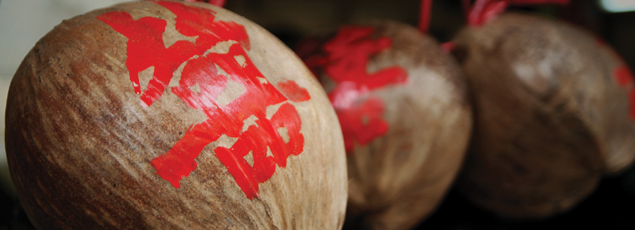
The decision of the Lou couple made all their relatives surprised due to their persistence in following all the rituals which have been followed for over thousands of years. During the preparation for the wedding, they bought two big coconuts with the word “joy” written on it, a traditional wedding gift set and two sets of red pajamas for the wedding night. For the rituals, they did the hair combing ceremony, which is believed to bless the couple to have a time-proof relationship, at the night before their wedding. Moreover, choosing their date of wedding was not an easy task. The Lou’s invited a master to help them choose the day of registration and wedding banquet through the use of Tong Sheng. Tong Sheng is a Chinese calendar which gives advice on what should be done and what should not be done on a particular day.
Reserving a venue for their banquet and preparing a guest list had already made them busy enough. What is the underlying reason for their persistence in spending a lengthy time on preparing the traditional rituals?
Mrs. Lou expressed that they are not sure if these customs can really help. “The older generations, such as my parents-in- law, also followed the customs in their marriage and they have a happy family,” she added. However, after following all the rituals, she somehow felt more secure in her relationship despite the high divorce rate in Macao in recent years. As the wish of all the couples, getting married is not different from entering a new stage of their lives—having their own children, generations after generations. Who would like to divorce with their partners and be alone for the rest of your life?
So who does not want to have a happy family life for the whole life?
The Lou couple also believes that if they follow the traditional Chinese rituals, they can help keep the Chinese tradition alive. “The Chinese wedding rituals have more than a thousand years of history,” they said. As the younger generation of the society, they believe they have the obligation to help promote and protect the Chinese culture.
Here are some tips for couples who intend to get married following the Chinese tradition. First, within the first four months of the marriage, a couple should not attend any wedding banquets or funerals. Secondly, in order to bless the bridegroom to have a bright future in his business, the bride must not step on the bridegroom’s shoes. Lastly, there is a belief that the louder the bride cries on the day of wedding, the more blessed the marriage will be.

 The term “post-80s” has been popular in media and society recently. It is important to explore the characteristics of this group of young adults aged between 20 and 30. While some consider this young generation as problematic and rebellious, others believe that the negative labels of the post-80s are just a false generalization established by the mass media.......