By Emily Ng Man Sam
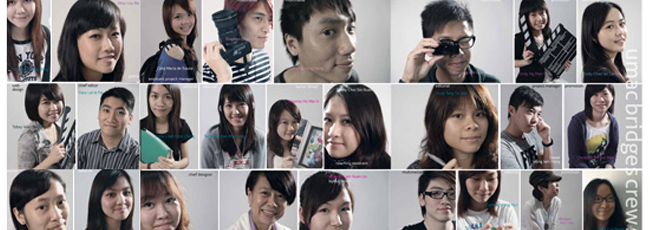
In an open office with four energetic designers, a few officers are busy like bees buzzing in the company while the creative director acts as a commander and gives an immediate order to his subordinates. The company Macau Creations stimulates interactions and every team member is overwhelmed with vitality and happiness under the leadership of Wilson Lam, a local designer with 30 years of experience in Macao and Canada. He leads a group of post-80s fresh graduates injecting creativity to local artist works to manufacture real “Made in Macao” products.
“Almond cookies are not the only souvenir for tourists in Macao,” said Lam, creative director of Macau Creations. Local artists need a channel for the acknowledgement of their products and our tailor-made products are the tools for people getting to know more about the uniqueness of the small city. “Macao is the blending of Chinese and European cultures and that’s why I named my company Macau Creations (澳門佳作),”added Lam.
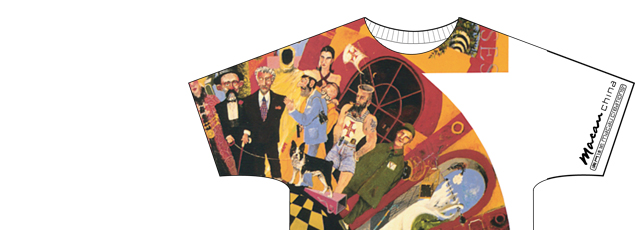
Macau Creations was founded in 2008 and offers a tailor-made systematic assembly line from a simple art piece such as a painting and graphic design to a commodity like a memo pad, T-shirt and a mug which will be sold in their retail shop to be open in a short term. Designers will apply their skills and branding strategies to works of different artists and promote the Chinese and Portuguese cultures to other countries.
“Introducing a product means problem solving,” said Katherine Cheung, a fresh graduate of design major in Macau Creations. “Everything seems to start from zero, and you have to picture out the solution in every stage,” Cheung added. Six months of work in the company provided her with practical experience different from the theoretical knowledge learnt at school. “It enables me to plan and predict every possibility before each step,” she noted. According to Cheung, production making in Macau Creations, unlike other design agencies which emphasize only requests of clients, provides a larger room for creativity.
Kris Chan, a Macao-born fashion designer raised and educated in Taiwan, echoed Cheung’s point. “Designers have to conduct analytical research about every piece of work of each artist before making use of its uniqueness and I think Macao should make good use of the historical buildings,” Chan said. He explained that Taiwan lacks profundity when they pursue innovations. Many antique buildings or temples were renovated or even reconstructed while Macao emphasizes protections of heritage sites.
Three of them agreed that the existing resources and facilities cannot meet the needs of Macao’s creative industry. “There are lots of bookstores in Taiwan; unlike Macao, it’s easy to approach books for designers and talk about fashion designs in Taiwan,” Chan stated. “You seldom see coffee shops with distinctive designs in Macao,” he added.
Cheung commented, “Macao citizens are short-sighted. Local designers lack an opportunity to advertise Macao without full support from the government.”
Lam anticipated that the government can make full use of existing resources and open up a platform to designers by remodeling historical buildings into exhibition centers and workshops in places like the closed “Iec Lon firework factory” in Taipa, which functions like “798 Art Zone” in Beijing.
“Are these works of local artists? I am proud of them!” Lam said that he hopes to hear such comments from tourists once they are exposed to distinct local art products, which are not just T-shirts roughly painted with the “Ruins of St. Paul” and peddled on streets. Lam is longing for a successful development with these post-80s fresh designers in the “Made in Macao” industry with their first step in the Expo 2010 Shanghai in May, a multinational platform with their products in the Macao Pavilion.
 The term “post-80s” has been popular in media and society recently. It is important to explore the characteristics of this group of young adults aged between 20 and 30. While some consider this young generation as problematic and rebellious, others believe that the negative labels of the post-80s are just a false generalization established by the mass media.......